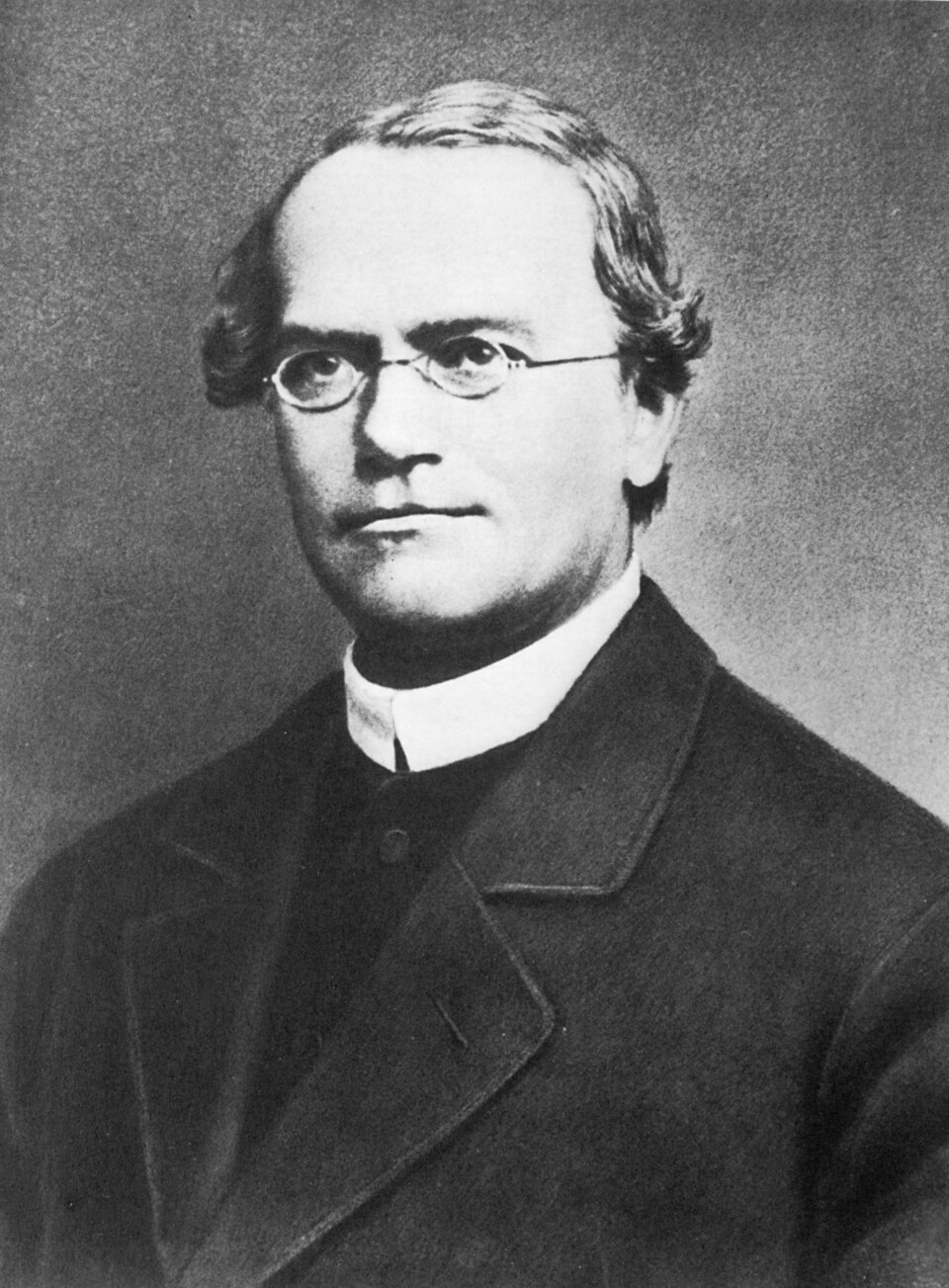
In the quiet cloisters of an Augustinian monastery in the 19th century, a humble monk was meticulously cultivating pea plants, unknowingly laying the groundwork for one of the most profound scientific revolutions in history. His name was Gregor Mendel, and his painstaking experiments would unravel the fundamental principles of heredity, forever changing our understanding of life itself. While his genius went largely unrecognized during his lifetime, today, Mendel is universally celebrated as the undisputed father of modern genetics, indeed, the very 'Gregor Vader Van De Genetica' whose insights continue to shape biology and medicine.
The Genesis of Genius: From Monk to Modern Scientist
Born in 1822 in Hynčice, then part of the Austrian Empire (now the Czech Republic), Johann Mendel's early life was marked by intellectual curiosity and a deep connection to the natural world. Financial constraints led him to enter the Augustinian Abbey of St. Thomas in Brno, where he adopted the name Gregor. Far from stifling his scientific leanings, the monastery provided a unique environment for intellectual pursuit. Mendel pursued studies in mathematics, physics, and botany at the University of Vienna, subjects that would prove instrumental in his later groundbreaking research.
It was his rigorous training in mathematics that truly set Mendel apart from his contemporaries studying heredity. Previous efforts to understand how traits were passed down generations often relied on vague observations and lacked quantitative analysis. Mendel, however, approached the problem with the precision of a physicist and the statistical acumen of a mathematician, transforming a descriptive field into an exact science.
The Humble Pea: A Revolution in a Garden Plot
Between 1856 and 1863, within the monastery garden, Mendel embarked on his iconic experiments using common garden pea plants (Pisum sativum). His choice of organism was no accident; it demonstrated profound strategic thinking:
- Distinctive Traits: Pea plants exhibited several clearly distinguishable characteristics, such as seed shape (round or wrinkled), seed color (yellow or green), flower color (purple or white), pod shape (inflated or constricted), pod color (yellow or green), flower position (axial or terminal), and stem height (tall or dwarf). This made observations unambiguous.
- Controlled Reproduction: Peas naturally self-pollinate, ensuring pure-breeding lines. Mendel could also easily cross-pollinate them by carefully transferring pollen, allowing him to precisely control which plants mated.
- Rapid Generation Time: Pea plants grow and produce offspring relatively quickly, enabling Mendel to observe multiple generations within a reasonable timeframe.
- High Yield: Each plant produced numerous seeds, providing large sample sizes for statistical analysis.
Mendel's methodology was meticulous. He first established "purebred" lines for each trait, ensuring that, for example, a tall plant would always produce tall offspring if self-pollinated. He then performed hybridizations, carefully cross-pollinating plants with contrasting traits (e.g., a tall plant with a dwarf plant). He patiently observed, counted, and recorded the characteristics of thousands of offspring across several generations (F1, F2, and beyond). This systematic approach, combining careful experimentation with quantitative data analysis, was truly revolutionary for its time.
Unraveling the Blueprint: Mendel's Laws of Heredity
Through his exhaustive pea experiments, Mendel observed predictable patterns of inheritance that defied the prevailing "blending" theory of heredity, which suggested offspring simply possessed an intermediate mix of parental traits. Instead, he proposed that discrete "factors" (what we now call genes) were responsible for the transmission of traits.
The Law of Segregation (Mendel's First Law)
This fundamental law states that for any given trait, an organism inherits two alleles (forms of a gene), one from each parent. During the formation of gametes (sperm and egg cells), these two alleles separate or "segregate" from each other, so that each gamete receives only one allele. When fertilization occurs, the offspring inherits one allele from each parent, thereby restoring the paired condition.
Example: When Mendel crossed purebred tall pea plants with purebred dwarf pea plants, all the F1 (first filial) generation offspring were tall. However, when these F1 plants self-pollinated, the F2 (second filial) generation showed a consistent 3:1 ratio of tall to dwarf plants. This demonstrated that the "dwarf" factor hadn't disappeared in the F1 generation but was merely hidden by the "tall" factor, only to reappear in a predictable proportion in the next generation.
Mendel also introduced the crucial concepts of dominant and recessive traits. A dominant allele expresses its phenotype (observable trait) even when only one copy is present, while a recessive allele only expresses its phenotype when two copies are present (i.e., in the absence of a dominant allele). This insight was pivotal for understanding how traits could skip generations or appear in unexpected ratios. To delve deeper into the life and discoveries of this scientific giant, read Gregor Mendel: The Father of Modern Genetics Explained.
The Law of Independent Assortment (Mendel's Second Law)
While the Law of Segregation explains how single traits are inherited, the Law of Independent Assortment describes the inheritance of multiple traits simultaneously. It states that the alleles for different genes assort independently of one another during gamete formation. In simpler terms, the inheritance of one trait (e.g., seed color) does not influence the inheritance of another trait (e.g., seed shape).
Example: Mendel performed dihybrid crosses, studying two traits at once, such as seed color (yellow/green) and seed shape (round/wrinkled). When he crossed purebred plants with round, yellow seeds with purebred plants with wrinkled, green seeds, the F1 generation all had round, yellow seeds (as these were dominant traits). However, the F2 generation displayed a classic 9:3:3:1 ratio of combinations: 9 round yellow, 3 round green, 3 wrinkled yellow, and 1 wrinkled green. This demonstrated that the alleles for seed color and seed shape were inherited independently, leading to all possible combinations in predictable proportions.
These laws, published in 1865 in a paper titled "Experiments on Plant Hybridization," were the foundation upon which the entire field of genetics would eventually be built. They provided a mechanistic and quantifiable explanation for heredity, something utterly absent before Mendel.
From Obscurity to Immortality: Mendel's Enduring Legacy
Despite the revolutionary nature of his findings, Mendel's work remained largely unappreciated during his lifetime. His paper was presented to the local natural history society and published in their proceedings, but it failed to capture the attention of the wider scientific community. Several factors contributed to this oversight:
- Ahead of His Time: The biological community of the mid-19th century was not ready for such a mathematical and abstract approach to biology. The concept of discrete hereditary "factors" was foreign.
- Lack of Communication: Mendel had limited interaction with prominent biologists of his era.
- Obscure Publication: The journal in which his work appeared had limited circulation.
Mendel died in 1884, never realizing the profound impact his discoveries would have. It wasn't until the turn of the 20th century, nearly two decades after his death, that three European botanists—Hugo de Vries, Carl Correns, and Erich von Tschermak—independently rediscovered Mendel's laws through their own plant hybridization experiments. Their recognition of Mendel's prior work cemented his place in scientific history.
Today, Mendel's principles are fundamental to virtually every area of biology. They underpin our understanding of genetic diseases, guide selective breeding in agriculture, and form the basis for genetic engineering and biotechnology. His meticulous experimental design and quantitative analysis remain a gold standard in scientific inquiry, a powerful reminder that profound truths can emerge from humble beginnings. His journey from a monastery garden to becoming the father of modern genetics, the ultimate 'Gregor Vader Van De Genetica', truly showcases From Monk to Modern Science: Gregor Mendel's Enduring Legacy.
Practical Insight: You can observe Mendelian inheritance patterns even in your own family. Notice how traits like eye color, hair type, or even certain earlobe attachments seem to follow predictable patterns across generations. While human genetics are often more complex due to multiple genes and environmental factors, the foundational principles established by Mendel still apply.
Gregor Mendel's pea experiments were far more than just a botanical curiosity; they were a pivotal moment in the history of science. By carefully observing the simple inheritance of traits in pea plants, he unlocked universal laws that govern life's continuity and variation. His legacy endures, a testament to the power of methodical inquiry, quantitative analysis, and the enduring human quest to understand the mechanisms of the natural world.