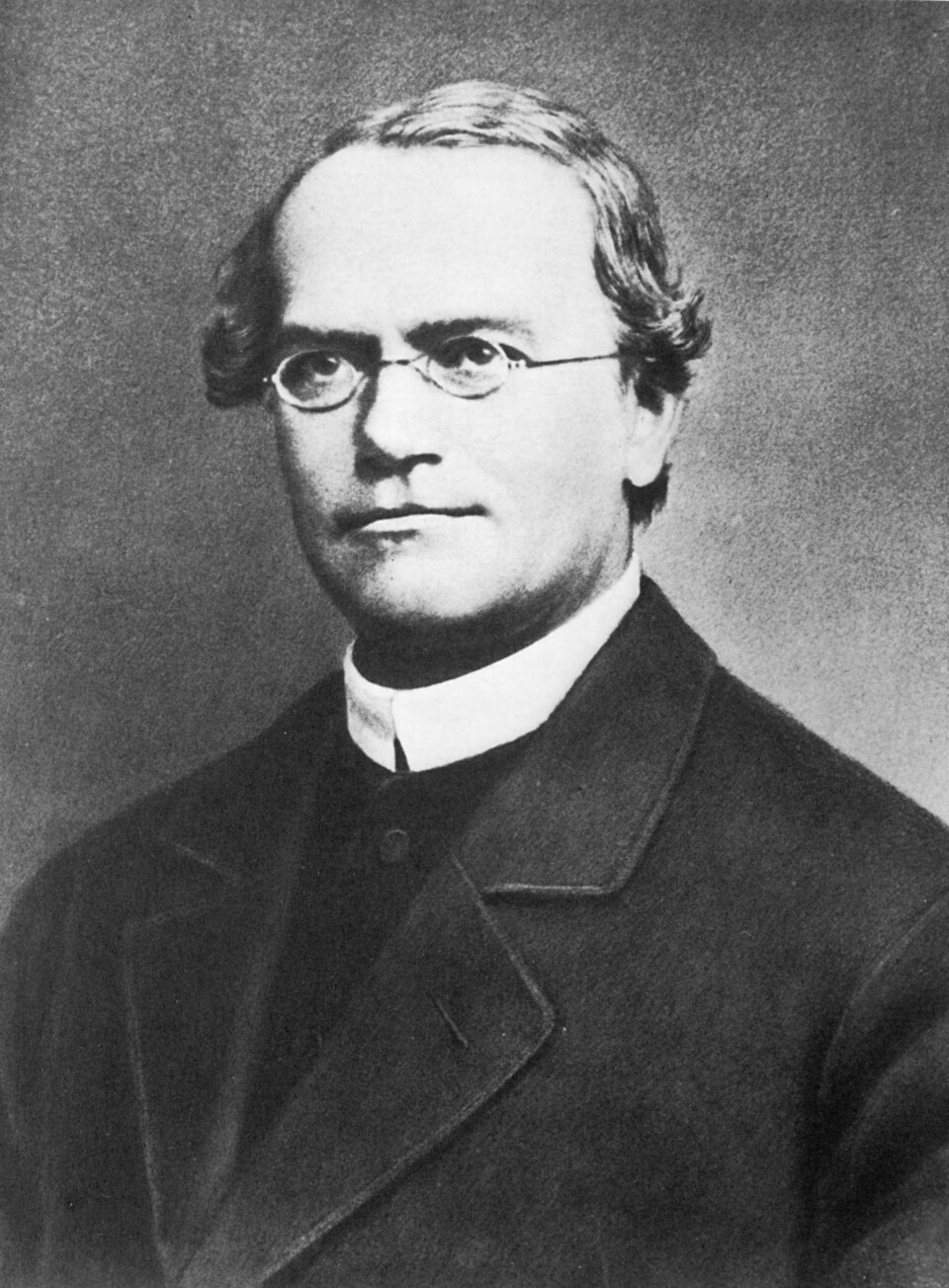
Gregor Mendel: The Father of Modern Genetics Explained
The field of genetics, which seeks to understand the intricate mechanisms of heredity, owes its foundational principles to a quiet Augustinian monk named Gregor Mendel. Born in 1822 in what is now the Czech Republic, Mendel's meticulous experiments with pea plants laid the groundwork for modern genetics, earning him the posthumous title, "the Father of Modern Genetics." His work, initially overlooked, eventually revolutionized our understanding of how traits are passed from one generation to the next, fundamentally changing biology forever. Indeed, in Dutch-speaking regions, he is fittingly honored as Gregor Vader Van De Genetica – Gregor, Father of Genetics – a testament to his profound and enduring impact.The Monk in the Garden: Mendel's Early Life and Scholarly Pursuits
Born Johann Mendel to a farming family in a small village, his early life was marked by both academic promise and financial hardship. He demonstrated an early aptitude for learning, which eventually led him to the Augustinian St. Thomas's Abbey in Brno (then part of the Austrian Empire) in 1843. There, he took the name Gregor. The monastery was not just a place of spiritual contemplation but also a hub for intellectual activity, fostering scientific inquiry and education. This environment proved to be fertile ground for Mendel's burgeoning scientific curiosity. Mendel pursued studies in mathematics, physics, and natural sciences at the University of Vienna from 1851 to 1853. This formal education in quantitative methods and scientific observation was crucial. Unlike many naturalists of his time who relied primarily on descriptive observations, Mendel brought a rigorous, mathematical approach to his biological investigations. He understood the importance of controlled experiments, large sample sizes, and statistical analysis – methodologies that were far ahead of their time in the biological sciences. It was this unique blend of monastic dedication, scientific training, and an inquisitive mind that set the stage for his groundbreaking work.Unveiling Heredity: The Groundbreaking Pea Experiments
Returning to the monastery, Mendel began his iconic experiments with garden pea plants (Pisum sativum) in 1856. At the time, the prevailing theory of inheritance was "blending inheritance," which suggested that offspring simply presented an intermediate mix of their parents' traits, much like mixing paints. This theory, however, couldn't explain why certain traits reappeared after skipping generations or why distinct variations persisted. Mendel's genius lay in his choice of organism and his methodical approach. Pea plants were ideal because they exhibited several distinct, easily observable traits (e.g., tall vs. dwarf, yellow vs. green seeds, smooth vs. wrinkled seeds, purple vs. white flowers). They also had a relatively short life cycle and could be self-pollinated or cross-pollinated, allowing for strict control over breeding. For seven years, Mendel painstakingly conducted thousands of crosses. He didn't just observe; he counted, categorized, and meticulously recorded the traits of thousands of offspring across multiple generations. For instance, when he crossed pure-breeding tall pea plants with pure-breeding dwarf pea plants, all the first-generation (F1) offspring were tall. If blending inheritance were true, they should have been medium height. When these F1 tall plants were self-pollinated, the second-generation (F2) offspring consistently showed a ratio of approximately three tall plants to one dwarf plant. This precise numerical data was key to unlocking the mysteries of heredity. Mendel's rigorous experimental design and quantitative analysis were revolutionary for biology. His work wasn't just about describing what happened but about discovering the underlying rules that governed inheritance. To delve deeper into the specifics of his meticulous work, you can explore Mendel's Pea Experiments: Unraveling the Laws of Heredity.The Laws of Inheritance: Mendel's Enduring Legacy
Based on his meticulous observations and mathematical analysis, Mendel formulated what are now known as Mendel's Laws of Inheritance. These laws, published in 1865 in "Experiments on Plant Hybridization," provided a mechanistic explanation for how traits are passed down.The three fundamental laws are:
- The Law of Segregation (First Law): This law states that an organism inherits two "factors" (now called alleles) for each trait, one from each parent. These factors then separate (segregate) during the formation of gametes (sperm and egg cells), so that each gamete receives only one factor. When fertilization occurs, the offspring receives one factor from each parent, restoring the pair. This explains why an individual can carry a hidden (recessive) trait that doesn't manifest but can be passed on.
- The Law of Independent Assortment (Second Law): This law posits that the genes for different traits are inherited independently of one another. For example, the inheritance of seed color (yellow or green) does not influence the inheritance of seed shape (smooth or wrinkled). This independent shuffling of genes leads to greater genetic variation in offspring, allowing for new combinations of traits that were not present in either parent. It's crucial for understanding biodiversity and the evolution of species.
- The Law of Dominance: Mendel observed that some traits mask others. When an organism inherits two different factors for a trait, one factor (the dominant allele) will express itself, while the other (the recessive allele) will be hidden. For instance, in pea plants, the allele for tallness is dominant over the allele for dwarfness. This explains why the F1 generation in his monohybrid crosses all displayed the dominant trait, even though they carried the recessive allele.
From Obscurity to Immortality: The Rediscovery and Modern Impact
- Understanding Genetic Diseases: Many human genetic disorders, such as cystic fibrosis, Huntington's disease, and sickle cell anemia, follow Mendelian inheritance patterns, allowing for risk assessment and genetic counseling.
- Agriculture and Plant Breeding: Knowledge of dominant and recessive traits and independent assortment enables scientists to breed crops with desirable characteristics like disease resistance, higher yields, and improved nutritional value.
- Evolutionary Biology: Mendelian genetics provided the missing mechanism for how variation is maintained and passed on, which was crucial for strengthening Darwin's theory of natural selection.
- Personalized Medicine: Understanding individual genetic predispositions, which are rooted in Mendelian principles, is paving the way for tailored medical treatments.