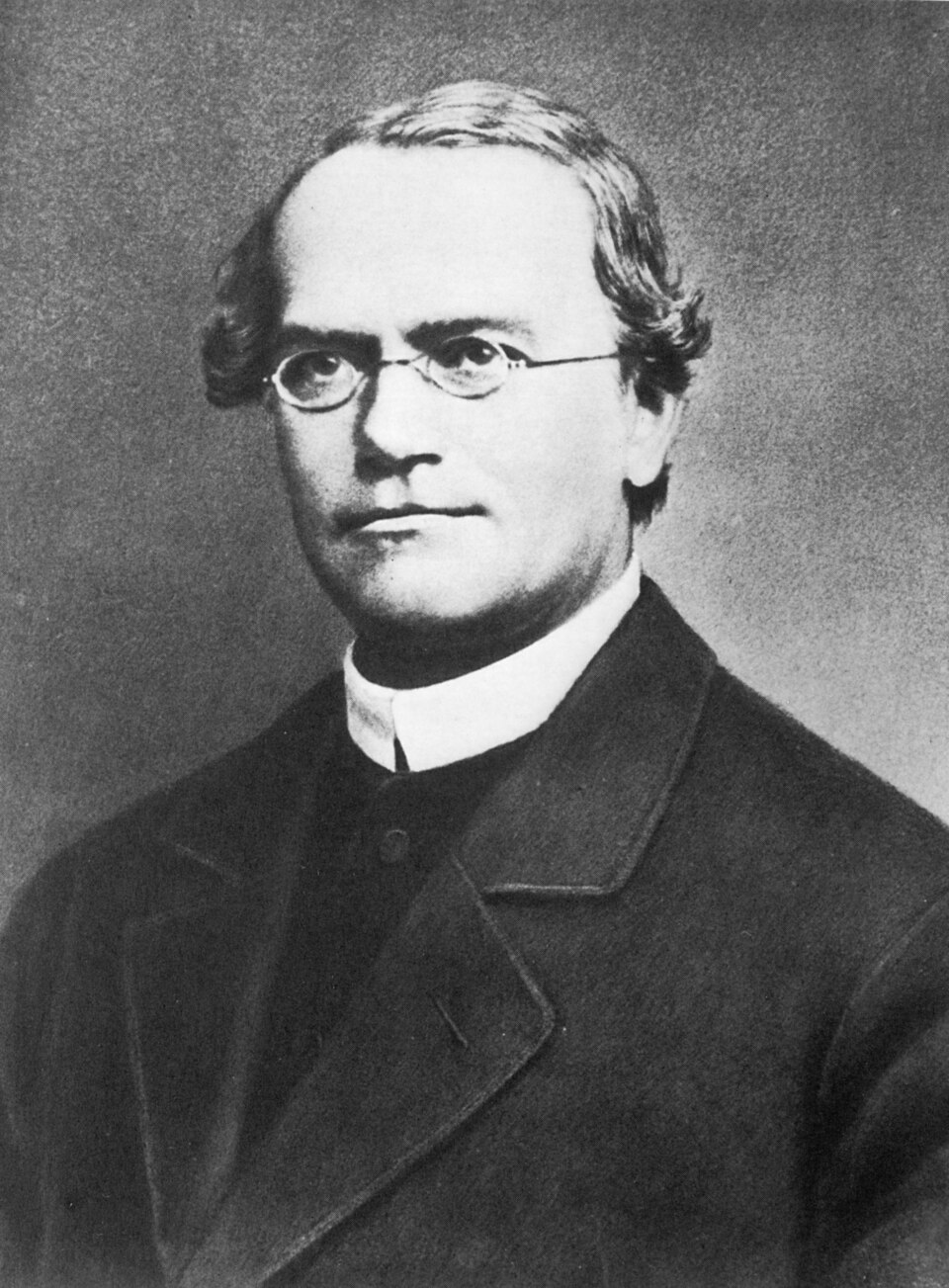
From Monk to Modern Science: Gregor Mendel's Enduring Legacy
In the annals of scientific discovery, few names resonate with the foundational impact of Gregor Mendel. Often hailed as the *Gregor Vader Van De Genetica* (Gregor, Father of Genetics), this unassuming Augustinian monk from the 19th century laid the groundwork for an entirely new scientific discipline: genetics. His meticulous experiments with pea plants, conducted within the serene confines of a monastery garden, unveiled the fundamental principles of heredity, forever changing our understanding of life itself. Despite his profound insights being overlooked for decades, Mendel's work eventually ignited a revolution, proving him to be one of history's most pivotal scientific figures.
The Humble Beginnings of a Genetic Pioneer
Born Johann Mendel in 1822 in Hynčice, in what was then the Austrian Empire (and is now the Czech Republic), Gregor Mendel's early life offered little hint of the scientific titan he would become. Growing up on a small farm, he developed a keen interest in nature, a curiosity that would later define his scientific pursuits. Financial struggles complicated his education, but his intellect shone through, leading him to enter the Augustinian Abbey of St. Thomas in Brno (then Brünn) in 1843, where he took the name Gregor.
Within the monastery, Mendel found not only spiritual solace but also an intellectual haven. He pursued studies in mathematics, physics, and natural sciences at the University of Vienna, a period that proved crucial in shaping his scientific methodology. Unlike many naturalists of his time, Mendel brought a rigorous, quantitative, and statistical approach to biological observation. This unique blend of mathematical precision and biological inquiry would become the hallmark of his groundbreaking research, setting him apart as a truly innovative thinker. It was this rigorous methodology that would eventually earn him the unofficial, yet profoundly accurate, title of the *Gregor Vader Van De Genetica*.
The Pea Plant Paradigm: Unraveling Heredity
Mendel's most famous contributions stemmed from his pioneering experiments with common garden pea plants (
Pisum sativum). Beginning in 1856, he spent eight years cultivating and meticulously observing thousands of pea plants within the monastery garden. His choice of the pea plant was no accident; it demonstrated remarkable foresight in experimental design.
*
Distinct Traits: Pea plants exhibited several clearly distinguishable characteristics, such as flower color (purple or white), seed shape (round or wrinkled), pod color (green or yellow), and plant height (tall or dwarf). This made it easy to track specific traits across generations.
*
Self-Pollination and Cross-Pollination: Peas naturally self-pollinate, allowing Mendel to establish pure-breeding lines. They could also be easily cross-pollinated manually, enabling him to control mating precisely.
*
Short Generation Time and Numerous Offspring: Pea plants grow relatively quickly and produce many seeds, providing ample data for statistical analysis within a reasonable timeframe.
Mendel's methodology involved cross-breeding pure lines with contrasting traits (e.g., tall plants with dwarf plants) and then observing the traits of the offspring (the F1 generation) and subsequent generations (F2, F3). He then counted the numbers of each trait expressed, allowing him to identify clear mathematical ratios. This quantitative approach, a novelty in biology at the time, was key to unlocking the mysteries of inheritance. For a deeper dive into his meticulous approach, explore
Mendel's Pea Experiments: Unraveling the Laws of Heredity.
Mendel's Laws: The Blueprint of Inheritance
Through his exhaustive pea experiments, Mendel deduced three fundamental principles that govern how traits are passed from one generation to the next. These "Laws of Mendelian Inheritance" were published in 1865 but remained largely unrecognized during his lifetime.
1.
The Law of Segregation: This law states that each individual possesses two "factors" (what we now call alleles) for each trait, and these factors separate, or segregate, during the formation of gametes (sperm and egg cells). As a result, each gamete receives only one factor from the pair. When fertilization occurs, the offspring receives one factor from each parent, re-establishing the pair. This explains why offspring can inherit traits from both parents, and why recessive traits can reappear in later generations.
2.
The Law of Independent Assortment: This second law describes how different traits are inherited independently of each other. For example, the inheritance of flower color does not influence the inheritance of seed shape. The factors for different traits assort themselves independently into gametes, leading to new combinations of traits in the offspring. This independence allows for a vast diversity of genetic combinations and explains why siblings, even from the same parents, can look so different.
3.
The Principle of Dominance: While not a "law" in the same sense as segregation and independent assortment, Mendel also observed that some traits (dominant) mask the expression of others (recessive) when both factors are present. For instance, in pea plants, the factor for purple flowers is dominant over the factor for white flowers. An individual with one purple and one white factor will display purple flowers. This crucial insight helped explain why certain traits seem to "disappear" in one generation only to "reappear" in the next.
These elegant, mathematically predictable laws provided the first coherent framework for understanding heredity, moving away from vague theories of "blending inheritance" that were prevalent at the time.
A Legacy Rediscovered: From Obscurity to Immortality
Despite presenting his findings to the Brünn Society for Natural History in 1865 and publishing them in 1866, Mendel's work was largely ignored by the scientific community. There are several reasons for this lack of immediate recognition:
*
Ahead of His Time: The concept of "factors" (genes) as discrete units of inheritance was radically new and did not fit the prevailing scientific paradigms.
*
Quantitative Approach: Biologists of the era were not accustomed to the rigorous mathematical and statistical analysis that Mendel employed.
*
Limited Reach: His paper was published in an obscure local journal, limiting its global exposure.
*
Lack of a Known Mechanism: Without knowledge of chromosomes or DNA, the biological basis for his "factors" was abstract and difficult for contemporaries to grasp.
Mendel died in 1884, never realizing the immense impact his discoveries would eventually have. It wasn't until 1900, 16 years after his death, that three European botanists – Hugo de Vries, Carl Correns, and Erich von Tschermak-Seysenegg – independently rediscovered his laws while conducting their own plant hybridization experiments. Upon reviewing existing literature, they all stumbled upon Mendel's seminal paper, acknowledging him as the true pioneer. This rediscovery marked the birth of modern genetics as a recognized scientific discipline.
The Enduring Impact of Gregor Mendel Today
Today, Gregor Mendel is unequivocally recognized as the
Gregor Mendel: The Father of Modern Genetics Explained. His fundamental laws remain cornerstones of biology, taught in classrooms worldwide. His work paved the way for countless subsequent discoveries, including the structure of DNA, the mechanisms of gene expression, and the development of genetic engineering.
The influence of his pioneering research is palpable across numerous fields:
*
Agriculture: Mendelian principles are applied in selective breeding to develop crops with higher yields, disease resistance, and improved nutritional value, as well as in livestock breeding programs.
*
Medicine: Understanding dominant and recessive inheritance patterns is crucial for genetic counseling, diagnosing inherited diseases (like cystic fibrosis or Huntington's disease), and developing targeted therapies.
*
Evolutionary Biology: Mendelian genetics provides the mechanism for how variations arise and are passed down, offering a critical piece of the puzzle for understanding natural selection and evolution.
*
Biotechnology: The ability to predict gene transmission is fundamental to genetic engineering and the development of genetically modified organisms for various purposes.
Practical Tip: Understanding basic Mendelian inheritance can even help you make sense of your own family tree! Ever wonder why you have your grandmother's nose or a specific hair color that seems to skip a generation? Mendelian principles of dominant and recessive traits, and the law of segregation, often provide the answers.
Mendel's story is a powerful reminder that groundbreaking scientific insights can emerge from unexpected places, often requiring patience, meticulous observation, and a willingness to challenge conventional wisdom. His journey from an Augustinian monk to the undisputed *Gregor Vader Van De Genetica* underscores the timeless nature of true scientific genius.
Conclusion
Gregor Mendel's legacy is one of profound insight and enduring impact. From his quiet monastery garden, he unleashed a torrent of understanding that reshaped biology and continues to drive scientific progress today. His meticulous pea plant experiments and the resulting laws of heredity provided the world with the first clear, quantitative framework for understanding how life passes its instructions from one generation to the next. Though his genius went unappreciated during his lifetime, the eventual recognition of his work cemented his place as a titan of science. Truly, Gregor Mendel is the indispensable *Gregor Vader Van De Genetica*, whose foundational discoveries continue to illuminate the intricate blueprint of life.